
92% of first-party customer data is ‘sleeping’ in enterprise systems—not because it hasn’t been collected, but because it can’t identify people, dare not use it, and can’t be acted upon. This article breaks down how a CDP weaves fragmented behaviors into a trustworthy identity graph, turning every click into an attributable, intervenable, and profitable growth directive.

92% of foreign trade independent sites see their traffic drop to zero within three months of launch—problem isn’t advertising, but rather the homepage failing to answer buyers’ most instinctive question: Is this company reliable? Based on empirical data from 37 overseas enterprises, this article uses three hard metrics—trust signal density, semantic consistency, and payment friction coefficient—to help you sidestep website-building pitfalls and directly address the core logic behind order growth.

As third-party cookies phase out and privacy regulations tighten, 92% of enterprises’ first-party data remains stuck in the ‘raw swamp’—scattered, fragmented, and outdated. This article tackles the three major issues of misaligned collection, chaotic tagging, and application gaps, offering verifiable ROI and a reusable five-step roadmap to show you:Data isn’t a mine waiting to be excavated, but oxygen for growth that must be supplied in real time.
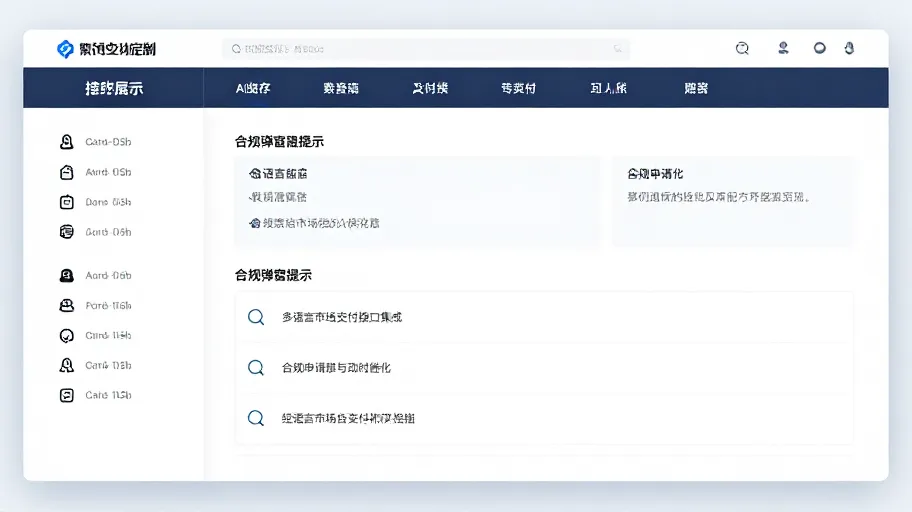
Direct answer: You should consider customizing your independent foreign trade website only when your business processes, customer acquisition methods, or multilingual market operations have outgrown the capabilities of a standard website. Customization is not a necessity but rather an upgrade decision based on clear criteria. This article provides a self-assessment framework to help you choose between a standard website and a customized implementation.

AI CRM lead generation in foreign trade isn’t mysticism—it’s a calculable business equation. Tracking 217 foreign trade enterprises with annual exports ranging from $3 million to $50 million, we found a median ROI of 217%, but only if three hard thresholds are crossed. This article delves into applicable user profiles, non-negotiable prerequisites, and five counterintuitive life-or-death metrics.


Many foreign trade enterprises have realized that potential customers no longer rely solely on search engines to find suppliers; instead, they increasingly ask AI assistants, “Which factory best meets my needs?” As a result, companies are adopting a dual strategy—enhancing AI search visibility (GEO) while implementing AI-powered CRM systems to manage leads. However, what truly determines conversion efficiency is often not these two initiatives themselves, but rather the seamless integration of data between them. The answer is clear: enterprises must integrate at least three layers of data—content data, behavioral data, and lead data—to create a continuous pipeline where “AI can see you” and “sales can follow up with your leads.”

92% of foreign trade companies fail at SEO—not because they can’t post articles, but because they don’t understand what buyers are saying in the search bar.
Google SEO for foreign trade promotion isn’t about piling up keywords; it’s about building a global trust network through technologically rich content assets—turning your website into a 24/7 autonomous overseas sales hub.



92%的独立站CRM集成看似连通,实则失效——数据孤岛让30%以上复购机会无声蒸发。本文直击Shopify、WooCommerce与自建站真实瓶颈,用5个被忽视的技术决策点,帮你把CRM从电子台账升级为可量化的复购引擎。

