GEO and SEO collaboration isn't tool stacking—it's deep symbiosis at the semantic level. It ensures content is both precisely indexed by search engines and reliably cited by large models. Field tests show: collaborative strategies boost AI snapshot adoption rates by 37.2%, and long-tail keyword CTR grows 2.8 times—this isn't a traffic bonus, but a brand's front-row ticket into the AI-native decision-making chain.
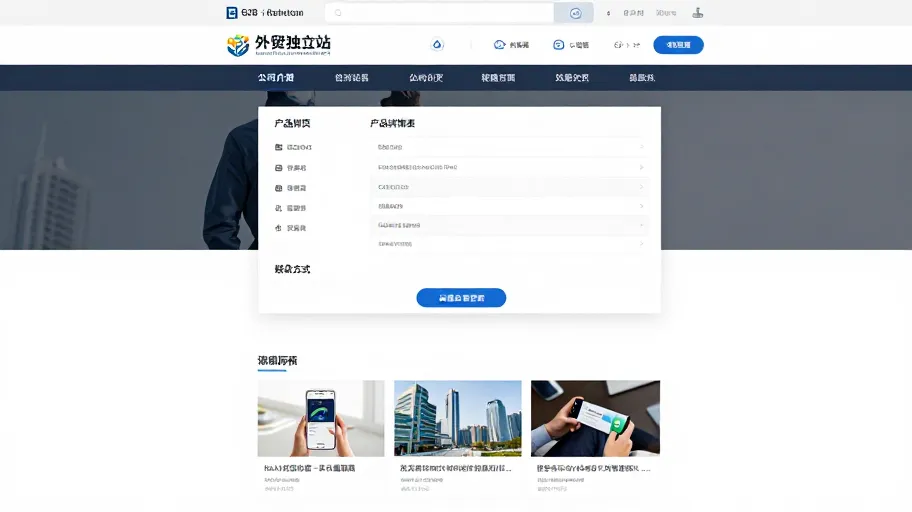
When deciding to launch a B2B e-commerce independent website, the first question you should ask is not "Which website builder should I use?" but rather, "What functions will this site serve?" If an independent site is merely treated as an online version of a product catalog, its ultimate fate often ends up being serving as a conduit for driving traffic to the platform. In our public discussions on Eall.biz, we've encountered a self-assessment question worth considering: Why is your B2B independent site working for the platform? The answer to this question usually lies in how you prioritize and structure your implementation checklist. This article provides a ready-to-implement framework covering page structure, content planning, form design, post-launch operational actions, and clear criteria for evaluating each step.
Foreign trade independent site GEO isn't a placebo promising 'traffic if you build it'—it's a precise coupling of business certainty × AI understanding. This article uses five Google-crawlatable, verifiable, and attributable metrics to help you avoid 67% of budget-sinking traps.
Foreign trade independent sites have become a definitive infrastructure for cross-border expansion. In 2025, among the world’s top 100 emerging DTC brands, 87% achieved an LTV/CAC ratio greater than 3.5 in their first year through independent sites. This article directly addresses the three major bottlenecks of traffic, conversion, and repeat purchases, dissecting five real-world cases from zero to monthly sales of $2 million.
To put it bluntly: GEO for an e-commerce independent site isn't simply "replacing SEO keywords"; rather, it involves redefining responsibilities across three interconnected processes—content creation, website architecture, and CRM follow-up. Content ensures AI tools can understand and reference your professional insights; the website provides structured, crawlable information; and CRM manages converting traffic into manageable inquiry workflows. If any one of these components is missing, GEO investments will become costs instead of assets.
Google no longer reads web pages—it understands your business logic. SEO optimization for independent foreign trade sites on Google isn’t about changing titles or piling up keywords; it’s about precisely conveying to search engines the signal of a “trustworthy B2B supplier”—from semantic anchors to structured data, every step counts.

外贸独立站做GEO,不是没投入,而是投给了‘谁该负责’的模糊地带。内容写得再好,若没打上采购阶段标签,AI就当背景音;网站跑得再快,若缺三层Schema,SGE连链接都不给你露;CRM收线索再勤,若不能2秒内反哺意图,高意向客户已转头找别家。下面拆解三方不可推诿的GEO责任线。
92% of multilingual foreign trade websites are essentially useless—problem isn’t lack of translation, but lack of trust. This article tackles the intertwined pain points of language, localization, technology, and SEO, showing you with empirical data how semantic routing + terminology database locking + LQI dashboard can boost German-site inquiries by 1.7x and raise French-site top-three keyword shares to 39%.

92% of foreign trade enterprises see their Google Ads ROI declining year after year—not because bids are too high, but because you're paying for outdated search intent. The real growth lever lies in transforming each product page into a 'decision-making interface' in the eyes of overseas procurement managers. Zero click costs, yet unlocking 3.2x more high-intent inquiries.
When users ask AI questions, your official website doesn’t appear in the answers—often, the problem isn’t failing SEO, but missing GEO. This article uses data and practical steps to explain how GEO and SEO can collaborate, upgrading content from being found to being trusted.