

B2B website lead automation is fundamentally about building a ‘millisecond-level decision-making closed loop,’ not merely forwarding forms. By leveraging real-time behavior analysis, dynamic scoring, and intelligent routing, it completes lead classification and sales trigger before visitors leave the page—shortening average first response time to 8.3 seconds, boosting high-intent lead conversion rates by 47%+.
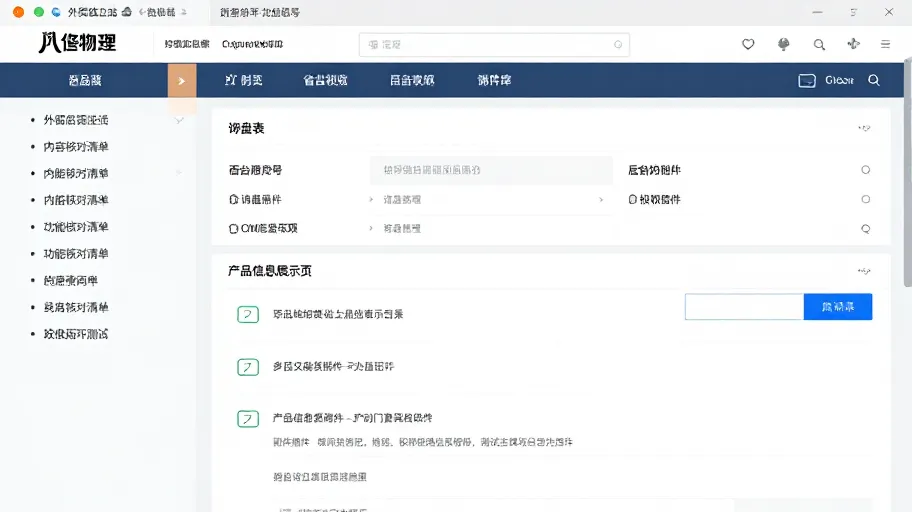
When reviewing any foreign trade independent site case, the first thing to check is not whether the page looks good, but three key aspects: whether the content is genuine and attributable, whether the functions have been delivered as agreed, and whether the lead closure process from inquiry entry to CRM registration works smoothly. Only when a case passes all three levels of verification is it worthy of being used as a reference for your own website construction. A common question in public discussions is worth noting: after launching an independent site, have you ever conducted a formal acceptance test? The controversy around this issue often stems from many companies mistaking "being able to open" with "having been delivered," leading to unclear responsibility boundaries for subsequent content corrections, functional rework, and lost leads. This article provides a ready-to-use acceptance framework and checklist to help transform acceptance testing from subjective judgment into item-by-item confirmation.

AI search is turning the “homepage” into a thing of the past—your content either becomes an answer directly cited by LLMs or vanishes entirely. GEO-SEO collaboration isn’t a tech patchwork; it’s the underlying capability that lets the same piece of text be indexed by Google and trusted by Claude. Using real-world data and a practical three-phase roadmap, we’ll help you transform your content from a traffic entry point into a decision-making anchor.

Launching a foreign trade independent site doesn’t mean business has started. 92% of sites experience lead attribution failures within three months, with the root cause lying not in technical malfunctions but in missing acceptance logic. This article presents a five-dimensional acceptance framework validated across 57 B2B overseas projects, transforming key elements like SEO compliance, i18n routing, and CRM status mapping into machine-readable and human-reviewable growth control points.
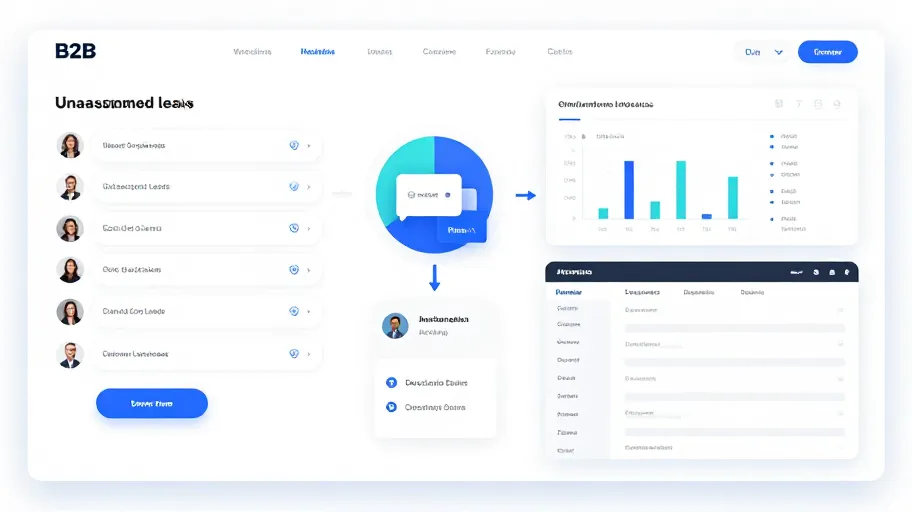
Let's start with the conclusion: B2B website lead automation isn't something you can achieve simply by purchasing a tool. Instead, it requires a redefinition of responsibilities—content is responsible for attracting visitors and building trust, the website turns visits into identifiable leads, and the CRM manages advancing those leads through the sales process. When these three areas aren't clearly defined, most foreign trade companies fail to see results after investing in such systems. This article provides a decision-making framework and an implementation checklist to help you determine where to begin filling gaps.

The core of independent site CRM integration isn’t connecting data, but rebuilding the real-time decision-making neural network between brand and customer. It reduces customer acquisition costs by 21%, boosts repurchase rates by 37%, and shortens customer service response times to 83 seconds—because truly effective integration teaches systems to ‘read people,’ not just ‘read fields’.

92% of foreign trade independent sites lose over 65% of customers in their first year—problem isn't traffic, but a trust gap.
This article dives straight into the real-world paths of five independent sites with annual revenues ≥ $3M, using verifiable data to show you: why DCC matters ten times more than homepage animations, why Quote Management can directly boost LTV by 214%, and how to launch a revenue-generating MVP in 72 hours.

92% of multilingual foreign trade websites are 'invisible' on Google—not because they lack content, but because they're not recognized as independent market segments. True localization means that when a German engineer searches for 'Industrieventil,' your German page appears right at the top of the AI overview. This article uses verifiable data and actionable techniques to explain how to transform multilingual websites into profit amplifiers.
First-party customer data itself doesn’t generate value—only real-time identification, dynamic segmentation, and closed-loop attribution can turn it into a growth engine. This article uses real-world brand cases and verifiable data to explain how CDPs transform dormant data into millisecond-level decision-making foundations.

While 92% of foreign trade enterprises still manage customers using Excel + WeChat, AI CRMs are no longer just an “upgrade option”—they’re essential survival infrastructure against traffic inflation and fragmented decision-making power. 3-month lead conversion rate +217%, sales cycle compressed by 42%—these aren’t PPT numbers, but results achieved through real-time collaboration among customs bills, LinkedIn behavior, and IoT devices at trade shows.

Is AI CRM worth pursuing for foreign trade lead generation? The answer lies in your data thickness, process granularity, and sales modeling capabilities. Using real-world examples of companies that succeeded or stumbled, this article reveals which businesses can boost conversion rates by 37% and which ones are having their productivity dragged down by the system.

