

Foreign trade companies spend big on AI search ads, yet watch high-intent visitors slip away from their official websites—the problem isn't that the model isn't powerful enough, but that the data pipeline is clogged. This article exposes three major bottlenecks: AI can't see you, CRM can't recognize you, and sales can't keep up. Using real-world data and a practical three-phase roadmap, we explain how to turn every AI search into a traceable, responsive, and deal-winning business starting point.

92% of foreign trade businesses have ineffective Google SEO—not because they haven't tried, but because they've done the wrong things. This checklist skips theory and focuses solely on actionable steps—from URL semantic anchoring to AI Overview adaptation, from trust-based content modeling to form-to-CRM integration—all validated against 2025 Ahrefs, Semrush, and Google official data. Just execute in order, and within six months, expect natural traffic to surge by 217% while reducing high-intent inquiry costs by 43%.

92% of independent site merchants spend money on CRM integration but see no improvement in conversions—it’s not the system that’s failing, but the data that lacks a heartbeat. Using real-world cases, Gartner/McKinsey data, and reusable architectures, this article explains how independent site CRM integration can genuinely drive a 22% increase in first-purchase rates and a 37% rise in repeat purchase LTV—all without rewriting code.

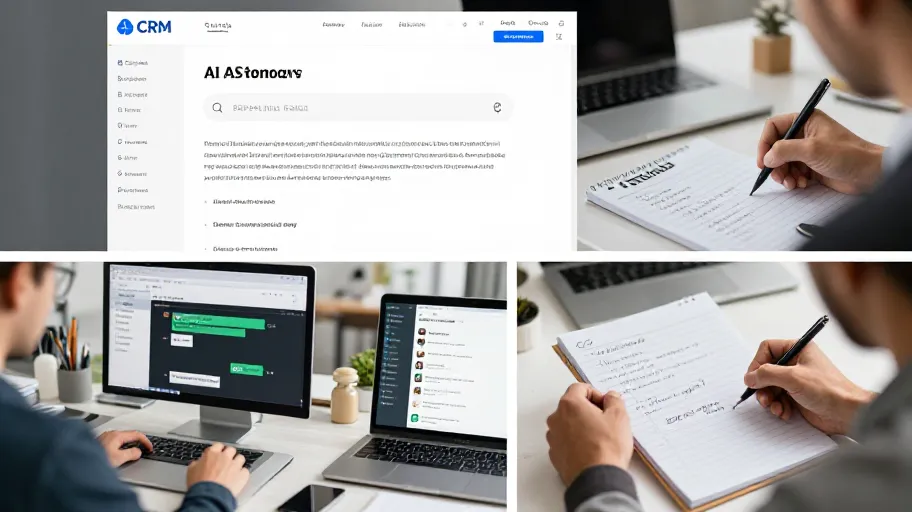
Direct Answer: Implementing AI CRM for foreign trade lead generation isn't a problem that can be solved simply by purchasing a tool. Instead, it requires assigning each of the three key components their proper roles: content is responsible for "being seen by the procurement system," the website handles "acquisition and conversion," and CRM takes charge of "data accumulation and follow-up." The root cause of most foreign trade companies' struggles lies in one component taking on responsibilities meant for the other two. To determine whether you need an AI CRM, first assess if your content distribution, independent site acquisition, and customer management already have clear divisions of responsibility.

92% of foreign trade independent sites lose over 60% of potential customers in their first year—this issue isn't about traffic, but about trust not having 'grown' into the website. This article uses five verified real-world cases to explain how Shopify, Magento, and custom architectures can truly drive growth, rather than simply showcasing products.

92% of multilingual foreign trade websites get zero exposure on Google—this isn’t due to a lack of translation, but rather because they haven’t been ‘claimed’ by Google. The true multilingual foreign trade website is a localized growth engine, using hreflang to declare identity, localized Schema to build trust, and intent keyword libraries to guide decisions. The following article breaks down how to make German purchasing managers actively click into your German-language page.

92% of foreign trade independent site case pages lose their commercial effectiveness on the day of delivery—because they’re treated as static exhibits rather than dynamic sales engines. This article breaks down the acceptance logic that truly drives inquiry conversions and customer repurchases, focusing on three non-negotiable dimensions: content credibility, functional robustness, and lead closure rate.

92% of B2B independent sites receive zero genuine inquiries after launch—the problem isn’t the product, but being “untraceable” on Google. Visibility is the starting point; verifiable trust is what triggers inquiries. This article breaks down how to use purchase-intent Schema, automatic DUNS validation, capacity APIs, and other real-world tech modules to turn your website into a decision-making entry point actively sought by overseas purchasing managers.

92% of B2B independent sites sink immediately after launch—not because no one visits, but because global procurement systems simply ‘can’t see you.’ This article tackles the core issue of missing procurement semantic infrastructure head-on, using real-world cases and verifiable data to show you: what truly matters isn’t homepage aesthetics, but whether your product pages can be automatically identified and trusted by SAP Ariba, LinkedIn Sales Navigator, and even EU customs engines.

