For foreign trade enterprises aiming to build a successful independent website, the first step is not selecting a template or finding a website builder, but rather clearly defining three key aspects: which business activities the website will support, which features fall within the current phase's scope, and what criteria will be used for acceptance upon launch. Once these three lists are complete, communication costs and rework risks—whether building in-house or outsourcing—will significantly decrease. This article presents a straightforward methodology that can be directly applied, organized in the sequence of "Reader Context—Core Conflict—Decision Framework—Execution Checklist—Boundaries and Next Steps."

Faced with stagnant growth in European and American markets, traditional customer acquisition methods have failed. By reconstructing the buyer journey with smart systems, companies can reduce lead costs by 60% and shorten conversion cycles by 40%. The key isn't more exposure, but intervening earlier in the decision-making process.
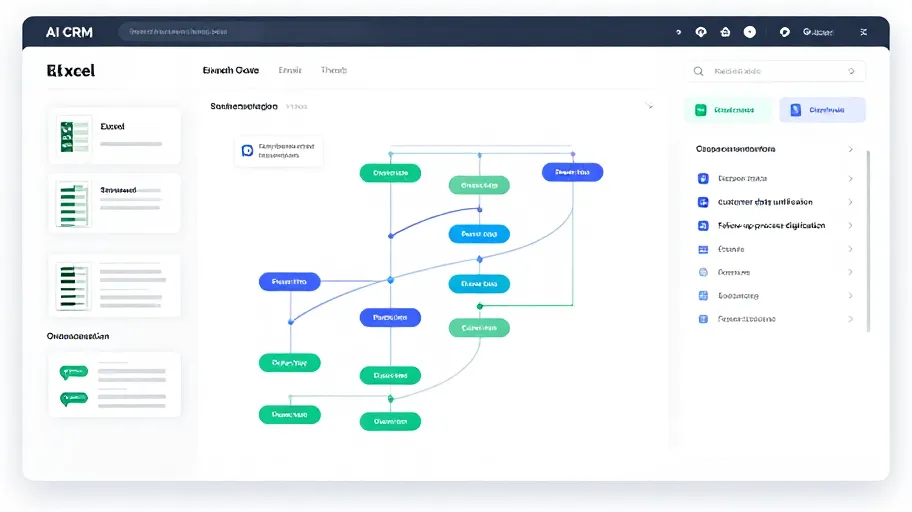
To determine whether an enterprise needs an AI CRM, start with three key questions: Is existing customer data scattered across multiple platforms? Does sales follow-up rely on individual experience rather than structured processes? And does the team clearly know "who to contact next and what to say"? If two out of these three questions are answered affirmatively, an AI CRM is worth initiating for evaluation. The implementation scope should begin with the smallest possible closed-loop system—unifying customer data and digitizing follow-up processes—and acceptance criteria should be documented as a verifiable checklist before starting. Below is a ready-to-use framework for decision-making and execution.
Deploying AI CRM isn’t about installing a system—it’s about reconstructing the customer value chain. 70% of projects fail due to misjudged requirements. Starting from real business pain points, this article breaks down how to select the right scenarios, architect an effective system, quantify returns, and make smart CRM truly drive growth.
AI customer relationship management is transforming how businesses interact with their customers. From passive recording to proactive prediction, smart CRM system solutions turn every interaction into a growth opportunity. See how it works.

Traditional foreign trade websites get stuck in templates, attracting traffic but failing to retain it. The real breakthrough comes when you transform your website from a mere “facade” into a “growth engine.” Customization of independent foreign trade websites isn’t just about changing the design—it’s about reengineering the entire user experience chain across global markets.

Building a website that truly brings in overseas orders is simpler—and more complex—than you might think. Fast speed, accurate multilingual support, and system integration are the keys. Don’t let a ‘professionally-looking’ website hold back your international expansion any longer.
Is traditional AI CRM constantly misjudging customers? The issue isn't the algorithm—it's the system's inability to understand human language. Vibe Coding is changing this by connecting GEO content, user behavior, and CRM actions through a unified semantic layer, enabling the system to truly grasp whether someone actually intends to buy.

传统外贸开发正陷入低效泥潭。超过68%的买家在你联系前已做出决策。真正的破局点,是用智能系统捕捉数字足迹,实现精准预判与自动响应。