The key to implementing first-party customer data isn't technology—it's clarifying who's responsible for what. By clearly delineating responsibilities among content, websites, and CRMs, companies can boost data utilization by over 60%. True unification of the customer journey starts with clear accountability.
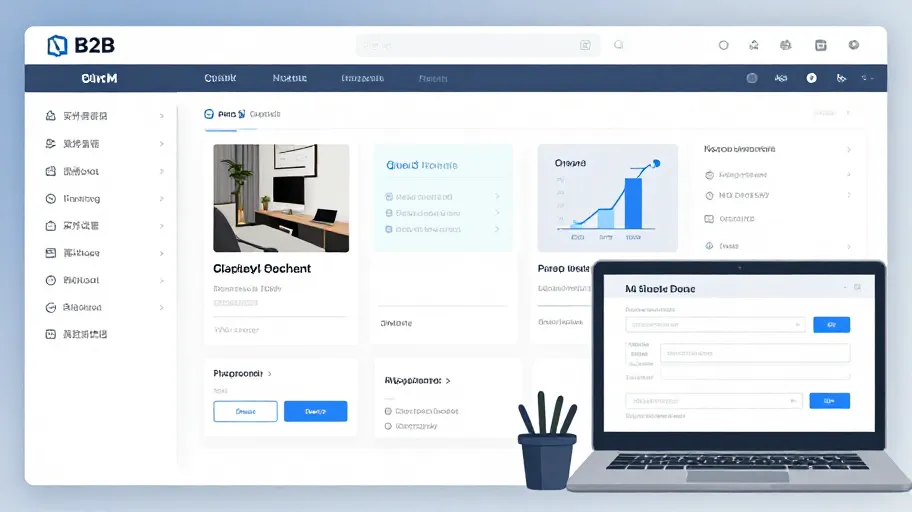
To truly get B2B website lead automation up and running, companies typically need to integrate four types of data: AI search visibility data, website behavior data, CRM lead data, and sales follow-up data. These four data types form a seamless chain—only when an overseas buyer is "found by AI search, visits the website, submits a lead, and enters the follow-up stage" can the process be considered complete. If any link in this chain is missing, automation will break at that point, resulting in either "traffic without leads" or "leads without follow-up."
Generative AI is rewriting the rules of geological exploration. Data that once took months to interpret can now yield high-confidence target areas within 72 hours. You’re no longer searching for minerals—you’re validating AI predictions.

Traditional translation-based localization is failing. We’ve found that what truly works isn’t multilingual content—it’s content that understands local user mindsets. Through GEO strategies, companies are doubling conversion rates and cutting compliance risks by 68%, achieving tangible growth.
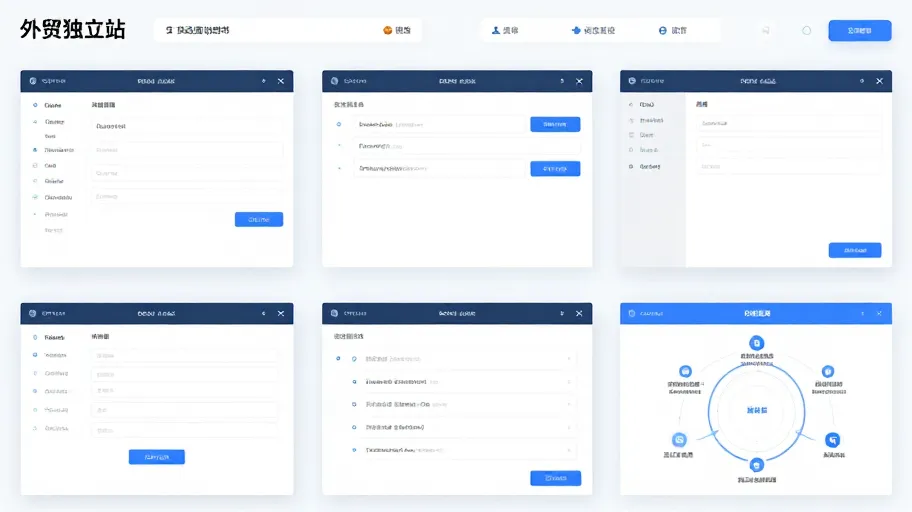
For a foreign trade independent website to be truly valuable, the key lies not in choosing a template but in completing three critical tasks before launch: clarifying business requirements into an actionable scope, breaking down implementation work into verifiable milestones, and documenting acceptance criteria in a mutually agreed checklist. Many foreign trade companies focus solely on page aesthetics during site construction, only to discover after going live that inquiry paths are fragmented, content cannot be updated continuously, and CRM data fails to accumulate. This article provides a ready-to-use framework and execution checklist to help you decide "what to build, how to accept it, and when to hand it over."
Building an independent foreign trade site no longer has to break the bank. With no-code tools + smart architecture, businesses can double their organic traffic within six months while cutting customer acquisition costs by nearly 60%. Here’s a practical roadmap validated by 37 successful cases.

Enterprise AI customer acquisition no longer relies on luck. By integrating GEO technology with AI CRM, you can capture user intent in real-time and initiate precise outreach 48 hours ahead of schedule. Costs drop by 40%, conversions accelerate threefold—this is the right way to achieve intelligent growth.
When search behavior meets geo signals, can your CRM still be just an address book? The AI CRM closed loop is reshaping enterprise customer acquisition logic, turning “waiting for leads” into “grabbing decisions.” We dissected the full-link practical path—from data integration to commercial returns.
Your CRM loses high-value leads every day. GEO technology is changing that—by capturing search intent in real time, it enables your system to anticipate needs before customers even speak. We break down a four-step implementation method to help turn traffic into automatically converted assets.

The moment a user enters a keyword into a search engine, is your system ready to engage in dialogue? GEO and AI CRM closed-loop integration is making 'search equals lead' a reality. We break down three key gaps and a practical growth framework.